

Speech, Language and Social Communication Therapy
Our Assessments and Therapy Pathways
We offer a range of therapy pathways for children and adults, to improve communication skills.
How Our Speech and Language Therapy Works
Our speech and language therapy (SLT) sessions are personalised to support the unique needs of each child, young person or adult. Therapy may follow a recent formal assessment, or, if one is not available, our speech and language therapist will carry out a formal/ informal assessment during the initial session to identify areas of need and agree on goals.
Following this, we’ll recommend a bespoke intervention plan. The number and frequency of sessions will depend on the level of support required, which we’ll discuss with you in detail.
Areas of Communication We Support
Our therapy can target one or more of the following areas:
Phonetics – Developing accurate speech sound production
Phonology – Improving speech clarity through sound pattern awareness
Grammar & Syntax – Strengthening sentence structure and word order
Semantics – Expanding vocabulary and understanding word meanings
Social Communication – Supporting conversational skills, turn-taking, understanding body language and tone of voice
Emotional Literacy – Helping children identify, understand, and express their emotions in healthy ways
We have a team of Speech and Language Therapist’s able to Support in the following areas
We work with children and young people with a wide range of speech, language, and communication needs, including but not limited to:
Speech sound disorders (e.g. articulation delay, phonological delay/disorder)
Language delay and developmental language disorder (DLD)
Selective mutism
Social communication difficulties (including those linked to autism spectrum condition)
Stammering / stuttering
Voice difficulties
Hearing impairment-related communication needs
Cleft palate-related speech difficulties
Down syndrome and other genetic conditions
Communication difficulties linked to neurodevelopmental conditions
Complex needs / non-verbal communication
If you’re unsure whether SLT is right for your child, we’re happy to advise and guide you through the process.
What to Expect in Therapy
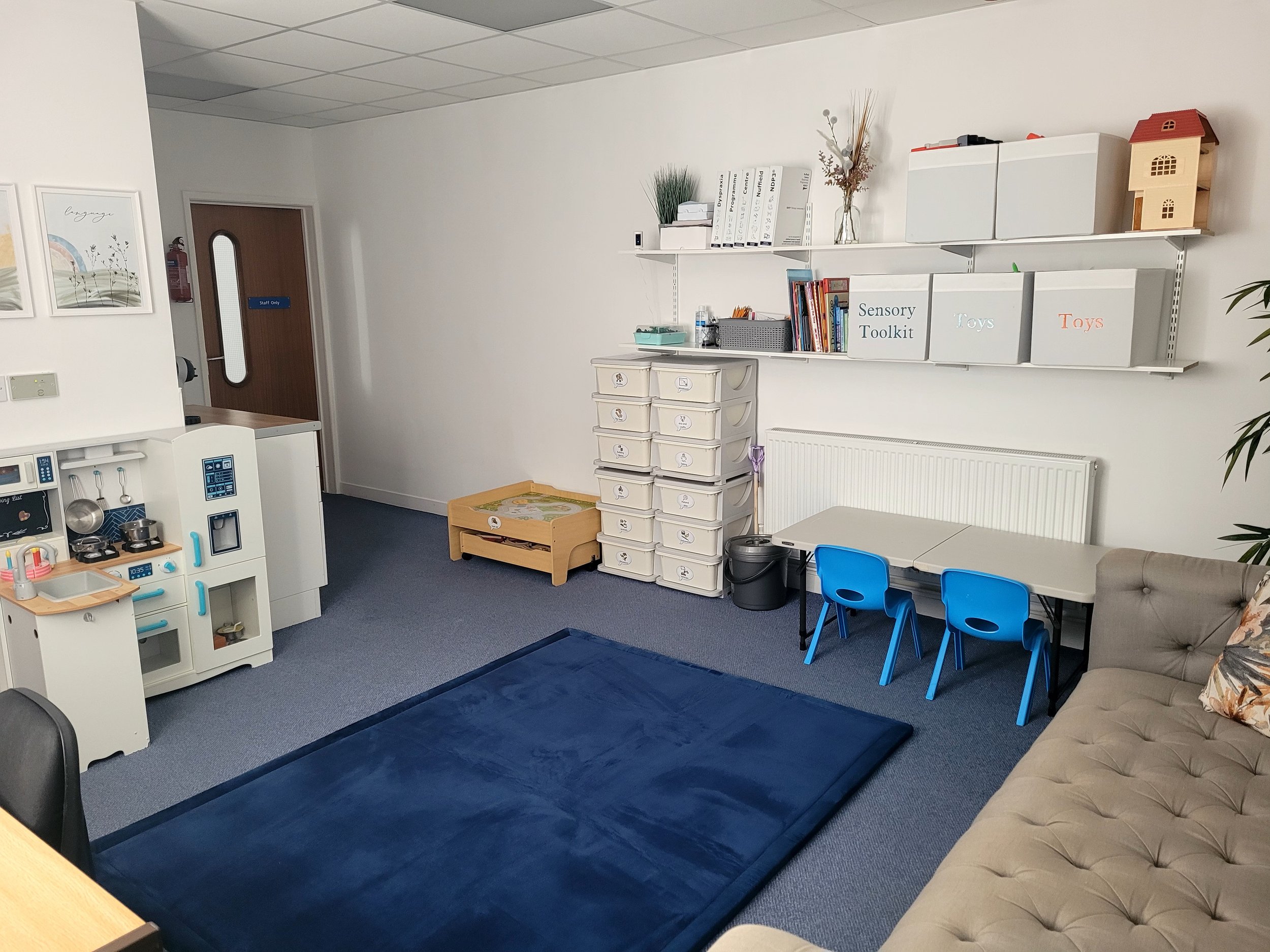
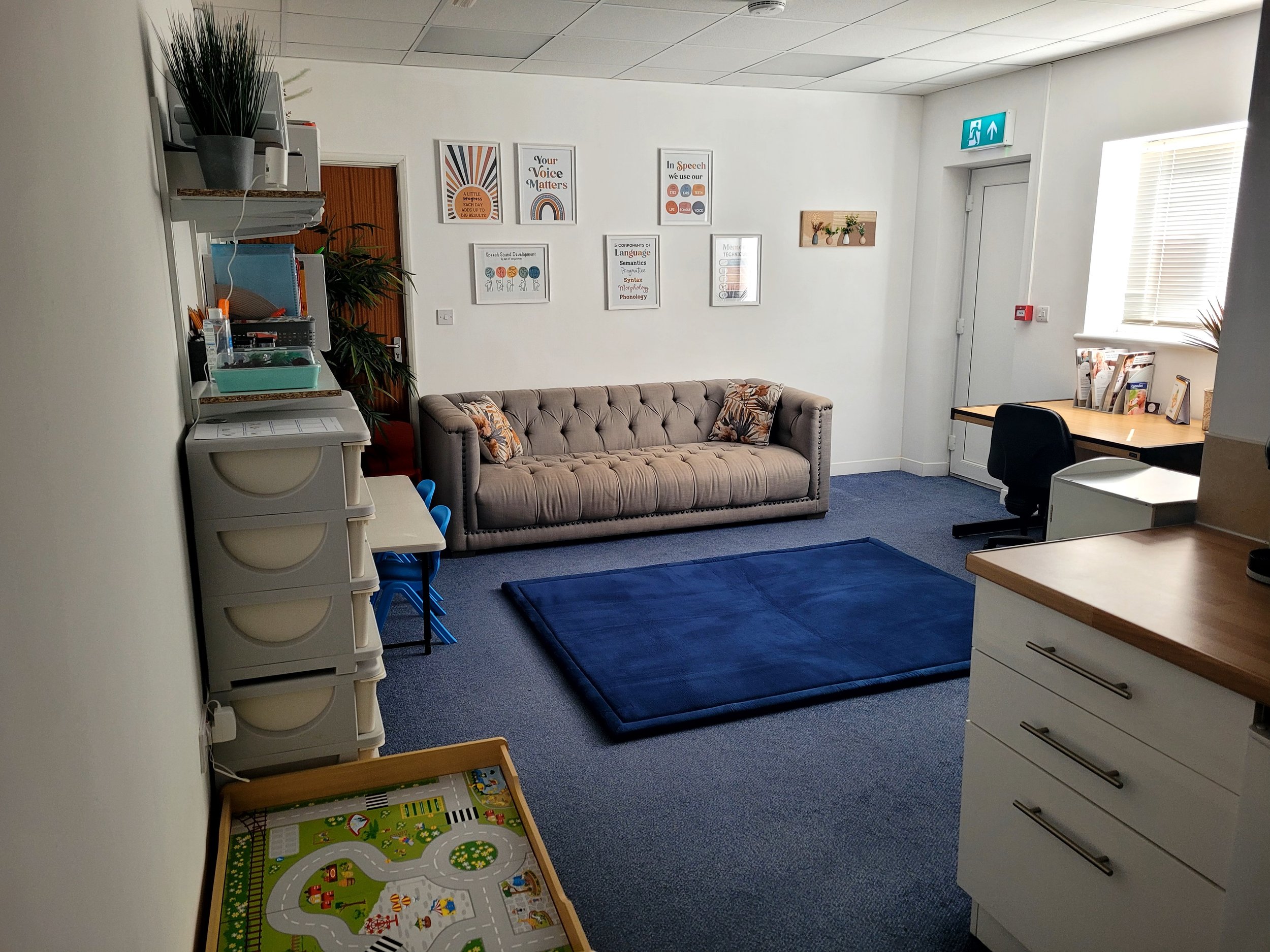
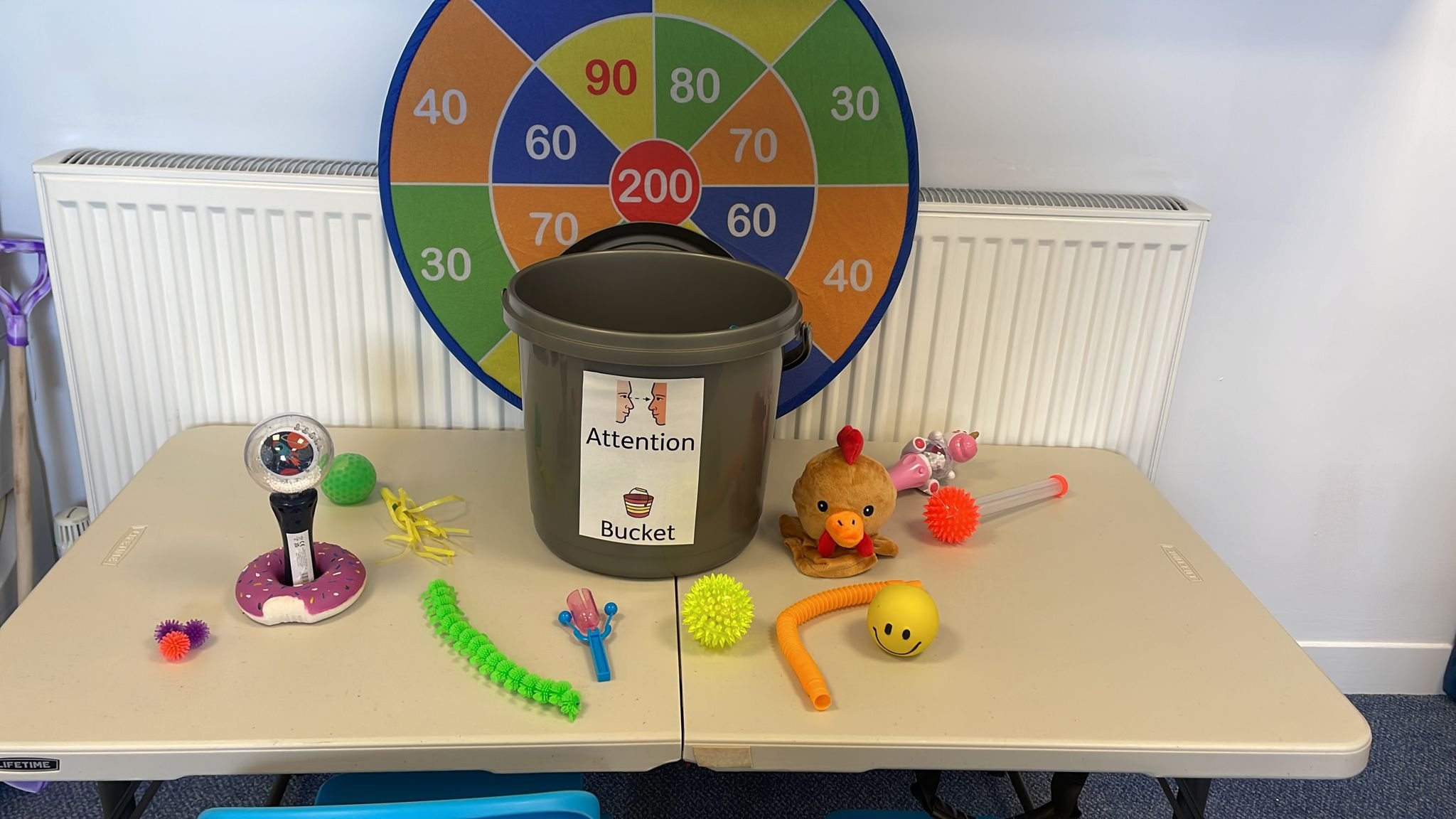
Sessions are around 45 minutes long and packed with engaging, child-friendly resources including toys, visual supports, games, and online interactive tools. These are carefully chosen to keep your child motivated and make therapy both fun and effective.
Between sessions, we’ll provide carry-over tasks and practical ideas to reinforce progress at home or in school.
Therapy can take place in our clinic, home, school, or online, and will be delivered by a qualified speech and language therapist or therapy assistant, depending on the plan in place.
Therapy Pathways

Speech Therapy
-
Speech therapy helps by strengthening the voice, manner and placement of the tongue, teeth, lips and palate to clearly produce speech sounds. Our speech helps us to communicate and be understood by a range of people.
-
• Difficulty with producing speech sounds
• Being misunderstood by others
• Parents or caregivers may have to translate for you
• Withdrawing from communicating with others -
• Phonological awareness
• Nuffield programme
• Cued articulation
• Auditory discrimination
• oro-motor exercises -
A Speech and phonological awareness assessment may be needed to help diagnose your condition. The process follows the format below:
1) A detailed speech assessment will be carried out to identify speech and/or phonological processing errors.
2) A feedback session is offered within 7 days of the assessment.
3) A detailed report with the outcome (diagnosis), analysis of findings and recommendations are provided.

Receptive and Expressive Language Therapy
-
Language therapy may support the understanding and use of vocabulary and concepts, making semantic associations, using accurate grammar, following instructions and building sentences to include conjunctions. When language is supported, children are better able to access their learning environment and confidently participate in communication exchanges.
-
• Limited vocabulary: less than 50 words at 18 mos., 200 words at 2 yrs., or 1,000 words at 3 yrs.
• Difficulty formulating sentences (use of vocabulary, grammar, syntax)
• Difficulty understanding verbal instructions, questions and concepts.
• May have difficulty processing and learning new information.
-
• Black sheep press resources.
• Language through colour
• Shape coding
• Vocab voyage
• Narrative resources
• CLEAR pictoys
• Derbyshire Language programme
• Language for Thinking
• Language for Behaviour and Emotions
• Time matters
• Rhodes to Language
• Semantic links -
A Language and Communication Assessment may be needed to help diagnose your condition. The process follows the format below:
1) A detailed language assessment will be carried out to identify working memory, receptive and expressive language needs.
2) A nursery/school/college observation or meeting with the class teacher is completed.
3) A feedback session is offered within 7 days of the assessment.
4) A detailed report with the outcome (diagnosis), analysis of findings and recommendations are provided.

Social Communication Therapy
-
For you, your family, and your wider network to develop an understanding and awareness of neurodiversity
Use your differences to channel your strengths and achieve your goals
Learn what strategies may support you in social situationsIncrease your emotional literacy and ability to express your feelings and thoughts
Develop self-awareness and learn about your differences
Learn about the wider neurodiverse network and local support services that may help
-
• Decreased/absent response to sounds and voices
• Decreased eye contact or face watching
• Limited safety awareness
• May not understand non-literal language (sarcasm, humour, idioms)
• Difficulty with understanding social cues (body language, emotions/feelings of others, etc.
• Inappropriate judgement (appropriate vs. inappropriate situations and topics)
• May prefer playing alone or only engaging in play with others on own terms.
• Difficulty making and maintaining relationships with others
• Getting overly upset with change or transitions from activity to activity
-
• Talking mats
• Social Thinking
• Lego Therapy
• Zones of Regulation
• Black sheep press
• Talkabout by Alex Kelly
• Emotional literacy
• Social stories
• Play-based activities
• Parent and Child interaction therapy
• Makaton
• AAC (Augmentative and Alternative Communication)
• Picture Exchange Communication System -
A Speech, Language and Communication Assessment, Autism Assessment or ADHD Assessment may be needed to help diagnose your condition. The process follows the format below:
1) A consultation is offered to determine what assessment pathway is required.
2) A pre-screen questionnaire is completed.
3) A Speech and Language Therapist will conduct an assessment with you or your child.
4) For child-only assessments - A nursery/school/college observation or meeting with the class teacher is completed.
5) A feedback session is offered within 7 days of the assessment.
6) A detailed report with the outcome (diagnosis), analysis of findings and recommendations are provided.
Not sure which service you need?
Reviews
-
![]()
"Lycali provided a thorough and compassionate autism assessment. Everything was explained clearly, and I finally feel understood. I wish I’d done this sooner."
-
![]()
"I’ve worked with other services before, but Lycali stands out for their professionalism and empathy. My therapist helped me navigate some really difficult times with sensitivity and skill."
-
![]()
I just wanted to say thank you to Dr Isobel Robb and Stephanie for making the assessment comfortable for both me and my parents to conduct. It was very thorough and the outcome will definitely help me in my future. I'm really thankful for receiving the results so quickly
-
![]()
“Thank you so much for all your help, support and care. You have explained everything we needed and thank you for saying I can get in touch if we need any more help.”
-
![]()
“You were very patient with our son and always gave us ideas so that we could support him between therapy sessions. Thank you so much!”
-
![]()
“After our daughter's Speech and language assessment, you offered great feedback and your report was very detailed. This was a huge help towards the EHCP process.”
-
![]()
"My daughter’s speech has improved so much in just a few months. Our speech therapist at Lycali was kind, engaging, and always kept us involved with providing follow up activities. I highly recommend them."
-
![]()
“Heidi was very engaging and really listened to the needs of my son. She explained her methods and gave us tips to try at home. We are really pleased with the service.”
-
![]()
“The calls have helped me to find more space and given me a safe space to discuss and release emotions. Tim's nature and communication is comforting and supportive, he adds thoughts and questions which offer space to analyse and to help growth.”
-
![]()
"Heidi was very enthusiastic and knowledgeable. She gave our son room to explore and enjoyable targets".
-
![]()
"Heidi was very patient with my child and has made him confident to use his voice"
-
![]()
"I can’t thank you enough for your help and support with my son. I will most certainly be coming back to your services again for an autism assessment".
-
![]()
"The ADHD assessment process was seamless, evidence-based, and respectful. I felt listened to throughout, and the diagnosis has helped me finally understand myself."
-
![]()
Everything has been amazing so thanks to you, Isobel and Stephanie. You have made things really easy with clear and quick communication and they really created a safe environment instantly.
-
![]()
Thank you so much. It was a pleasure working with your staff. They were really kind and helpful and made the process easier for both me and Matilda.
-
![]()
"We had a brilliant experience with Lycali. The assessment process was clear, kind, and professional from start to finish. My son felt at ease, and we finally have a clear plan for supporting his needs."
-
![]()
"I was nervous about starting therapy, but the team at Lycali made me feel heard and respected from day one. Their care was outstanding, and the progress I’ve made is life-changing."

Leave us a review on Google: Leave a review
About Lycali
Lycali offers a professional and friendly service where time and attention can be taken to ensure the service received is of the highest standard and there is minimal waiting time. Our specialist team will always take the time to provide expert advice so you are aware of all the pre- and post-diagnostic and therapy services available. Our clinic is for children and adults, based in Thanet and surrounding areas. We provide online or in-person therapy sessions.





Because Every Individual Deserves to Be Understood